
Board-on-board overlaps each picket over the one beside it, so the fence stays solid after the cedar shrinks in its first Texas summer. Side-by-side sets pickets edge to edge. It uses fewer pickets, but thin gaps can open as the boards dry. Every fence on this page is one we built. The watermark on each photo is ours.
We are Wood Wonders Fence & Repair, a family-run fence company based in Plano since 2004. Most homeowners already know they want cedar. The harder choice is the style: how the pickets sit, what goes along the top, and how the fence handles a slope or a change in height. These photos show the options we build most, so you can point at the one you like.
Board-on-board cedar fence pictures
On a board-on-board fence, each picket overlaps its neighbor, so there is no line of sight through the fence from either side, even after the boards shrink. When privacy is the reason for the fence, this is the style that protects it. Some homeowner associations require it, with the finished side facing out.
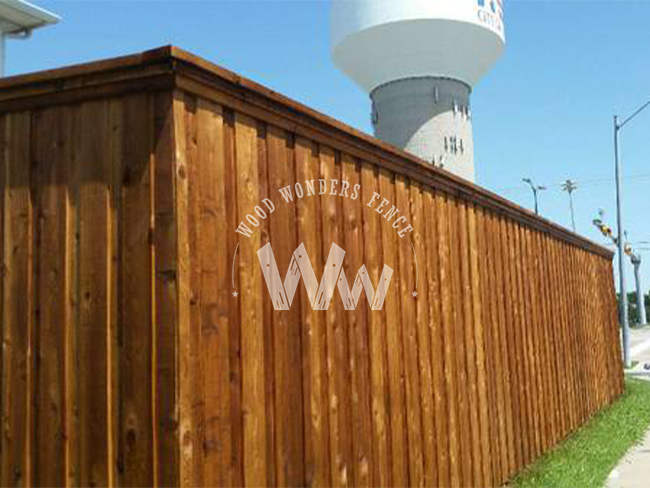
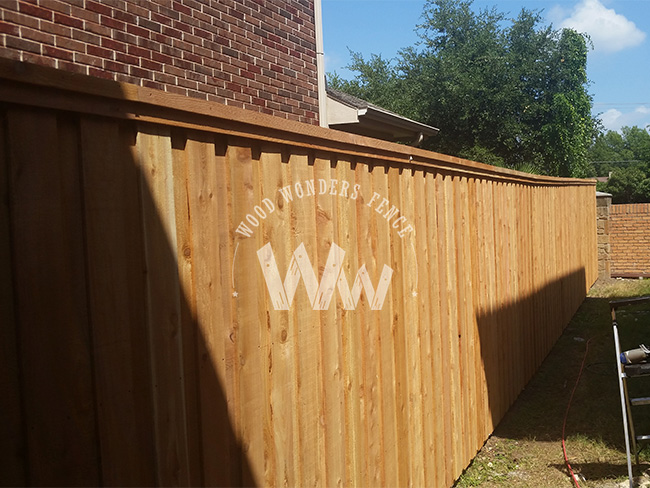

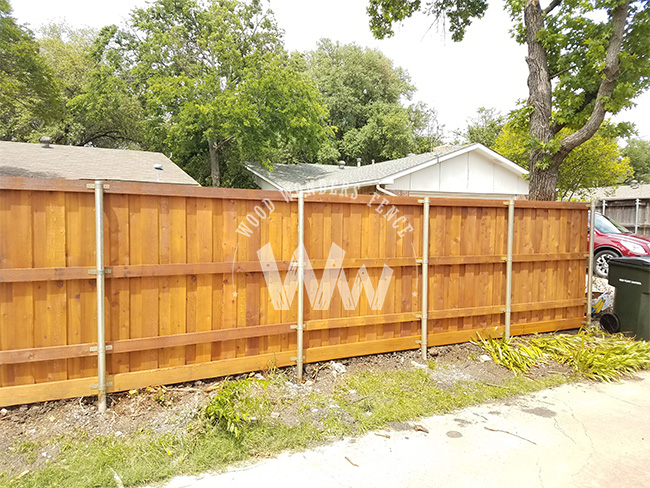
Side-by-side cedar fences
Side-by-side pickets butt edge to edge for a flat, clean face, and the fence takes fewer pickets per foot. The trade-off is shrinkage: cedar dries out in the first summer, and side-by-side pickets can open thin gaps as it does. We also build spaced pickets, a third pattern for when you do not need full privacy.

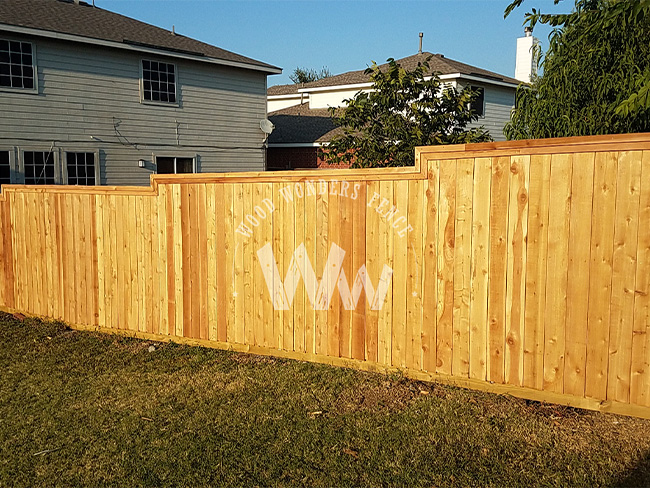
Cap and trim: single, double or triple
The cap is a flat board laid across the top of the pickets. It covers the end grain, which is where pickets soak up rain and start to split, and it stiffens each panel. Trim boards run underneath the cap. One trim board gives a simple finished edge. Two or three build a deeper, layered top line that reads as more finished from the street.


Step-downs and height changes
Where the yard slopes or the fence changes height, we step the panels so each section stays level and square instead of leaning with the ground. The same approach drops an 8-foot fence to 6 feet partway along a run.
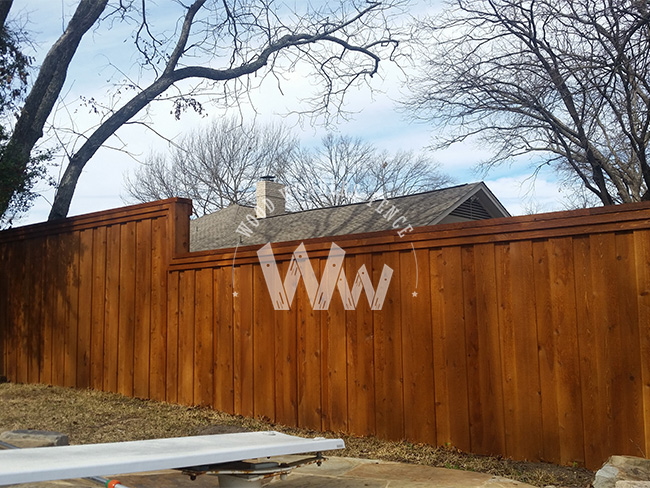
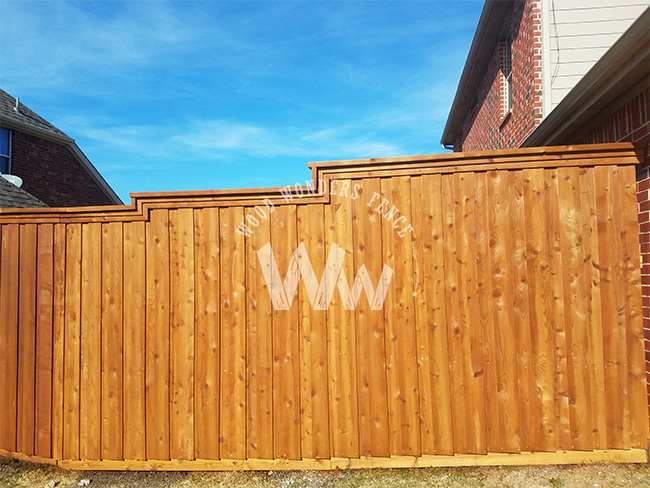

What you don’t see: posts and stain
Steel posts as standard
Our cedar fences go up on metal posts as standard, with pressure-treated wood posts as the alternative. Two of the photos above show the rail side of the fence, where you can see the steel posts and the rails fixed to them. See every post, picket and layout option on our cedar fences page.
Stained or natural
Stain is the biggest single thing you can do for a cedar fence’s lifespan. It blocks the sun and sheds water, the two things doing most of the damage above ground. Some HOAs set the stain color, so check before you choose. More on our fence staining page.
Board-on-board fence questions
Is board-on-board worth it over side-by-side?
If privacy matters, usually yes. Board-on-board uses more pickets, so the material cost is higher, but it stays solid after the cedar shrinks. Side-by-side can open thin gaps in its first summer. Our fence cost calculator gives a range for your yard.
How tall can a backyard fence be?
Plano and Frisco allow up to 8 feet in back and side yards. McKinney allows up to 8 feet 6 inches in the rear yard. Most fences we build are 6 or 8 feet. Our fence permit guide links to each city’s own rules, and our 8-foot privacy fence page covers when the extra height is worth it.
Can you build to my HOA’s required style?
Bring your HOA’s written requirements to the estimate. Some associations limit height, set the stain color, or require board-on-board with the finished side facing out. City approval does not override your HOA, and your HOA does not override the city, so get both in writing before work starts.
See a style you like?
Tell us which photo, and we will quote it for your yard. Estimates are free and quoted on site.
More photos: wood fence gates and fence before and after.